Household cleaning products banner

Accidental Poisoning

Each year, thousands of people are hospitalised due to accidental poisoning from medication, household cleaning products and other substances found in the home.  Children under five and vulnerable adults are especially at risk of harm.

Key facts: accidental poisoning in children

  • Most accidental poisonings involve children under five
  • On average in England,five children under five are admitted to hospital daily due to suspected poisoning[1]
  • Children from the poorest families are three times more likely to be hospitalised due to accidents, including poisoning[2]

Why are young children more at risk?

  • Curiosity is natural: Young children explore their environment but lack awareness of danger.
  • Mouth-based exploration: They often put objects in their mouths to understand texture and taste.
  • Imitation: Children mimic adult behaviour, including unsafe use of household products.
  • Confusion with toys or sweets: Liquid capsule detergents can be mistaken for playthings, posing ingestion and eye injury risks.

When do accidental poisonings happen?

Poisoning can happen at any time of the day, but risks increase:

  • When products are left within the reach of an inquisitive child
  • When routines change or there are major changes within the family
  • Children are in a different environment, such as visiting friends or relatives
  • Adult’s attention is diverted, even briefly
  • Through simple mistakes when transferring products into a different container.

Preventing accidental poisoning for children?

  • Supervise children closely at home.
  • Store household chemicals out of sight and reach, ideally up high in a locked cupboard.
  • Keep products in their original containers.
  • Replace lids and store products away immediately after use.
  • Safely dispose of unwanted chemicals.
  • Store cleaning products separately from food and medicine.
  • Follow label instructions carefully.
  • Never mix products—this can release dangerous gases.

Watch our videos

Keep caps from kids thumbnail #2
Keep caps from kids

Take Action Today, Put Them Away. A project has been developed in consultation with the UK Cleaning Products Industry Association to raise awareness of the dangers of household cleaning products.

Poisons children find at home thumbnail #3
Poisons children find at home

Produced by Dr Nicola Ubayasiri from Nottingham University Hospial's Paediatric Emergency Department showing what poisons children may find at home.

Key facts: accidental poisoning in older people and vulnerable adults

Among older adults, cognitive decline significantly increases the risk of accidental poisoning. Conditions such as memory loss, confusion, and impaired judgment can lead to serious medication errors. 

In addition to medication-related risks, cognitive impairments may cause older individuals to mistakenly ingest household chemicals or other toxic substances. For example, they might confuse cleaning products with food or drink, especially if containers are not clearly labelled or stored properly.

As people age, physiological changes—such as slower metabolism and reduced liver and kidney function—make it harder for the body to process and eliminate toxins. When combined with cognitive challenges, the likelihood of poisoning increases substantially.

How can you prevent accidental poisonings for older people and vulnerable adults?

To reduce these risks, caregivers and healthcare providers can:

  • Use pill organisers and clearly labelled containers.
  • Schedule regular medication reviewswith pharmacists or doctors.
  • Store household chemicals safely - separate from food items and medication, ideally in locked cabinets.
  • Provide education and support for older adults and their families on recognising and avoiding potential hazards.

Examples of poisons in the home 

  • Cleaning products
  • Laundry detergents and sprays
  • Solvents
  • Medicines
  • Electronic cigarettes and their liquid refills
  • Button batteries
  • Alcohol
  • Plants
  • Gardening products

For more tips on preventing accidental poisoning download our factsheet here

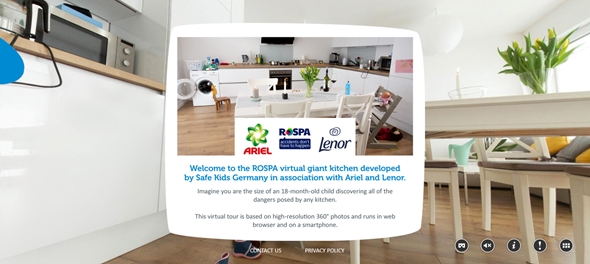
Discover kitchen safety through your child's eyes!

Step into our virtual kitchen and see the world from your child's perspective.

Our interactive simulation takes you on a journey through a typical kitchen, highlighting all the potential hazards lurking within reach of little ones. From sharp objects to hot surfaces, we'll show you exactly what your child sees and help you identify areas for improvement in your own kitchen.

Don't wait until an accident happens – arm yourself with knowledge and take proactive steps to safeguard your family. Explore our virtual kitchen and make your home a safer place for your little explorers.
 

If you think someone has been poisoned:

  • Call 999 immediately.
  • Do not try to make the person vomit unless advised by a medical professional.
  • Keep the product container to show medical professionals.

Take Action Today

Find out more about RoSPA's campaign to protect children from the risks of household poisoning, funded by the UK Cleaning Products Industry Association.