

Nappy Sacks
Nappy sacks are thin plastic bags used to wrap and dispose of dirty nappies. They are normally packaged in a loose bundle like sandwich bags, making it easy for a bag to be grabbed with one hand. But this can also cause more than one to come out of the packet at a time.
Although they are a common household item for families with young children, they pose serious risks when stored incorrectly or left in reach of babies in children.
What are the risks?
Nappy sacks can cause suffocation or choking. The material is very thin and can stick to a child’s nose and mouth, making it difficult to breathe.
Babies are especially at risk because they grab or mouth objects without understanding the danger.
Loose nappy sacks are especially dangerous when they are left within reach of a baby, including near cots and changing areas, even if tucked under the mattress.
Warnings and safety guidance
Nappy sacks are recognised as a suffocation risk, especially for babies under one year old.
RoSPA believes that nappy sacks should carry clear safety warnings so parents and carers understand the risk and can use them safely. RoSPA, with industry partners, has called for stronger and more consistent warning labels on packaging.
Keeping babies safe
Always keep nappy sacks and other plastic bags out of reach of babies and young children.
Do not leave loose nappy sacks in a baby’s sleeping area or anywhere they can be accessed.
Dispose of used sacks straight away and store unused ones out of reach of children.
Top tips
- Keep nappy sacks out of the reach of children at all times
- Never leave them in or near a cot, pram, or changing area
- Dispose of them as soon as possible after use
- Be aware that thin plastic can stick to a baby’s face and block breathing.
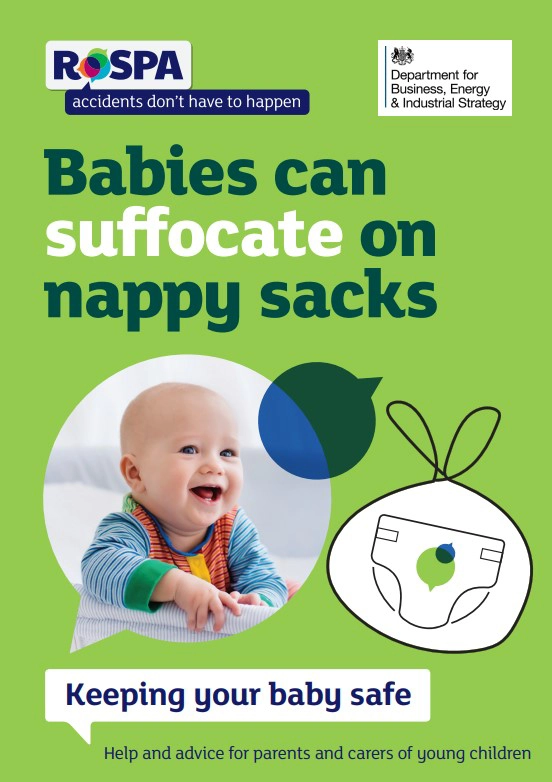

RoSPA, in partnership with the BRC, has developed guidelines for retailers. The guidelines set out the measures that retailers can take to help reduce the risks associated with using nappy sacks products, including the inclusion of warning labels on packaging to alert parents to their potentially-deadly dangers