

Climate resilience and worker welfare must be built into construction planning, RoSPA webinar hears
Construction and infrastructure professionals must build climate resilience into every stage of project planning, according to speakers at RoSPA's webinar, Managing Construction and Infrastructure Risk in a Changing Climate.
Chaired by RoSPA's OSH and Falls Manager Jules Robinson, the session explored how rising temperatures, heavier rainfall and prolonged drought are affecting construction sites, sustainable drainage systems (SuDS) and worker safety.
If you'd like to watch the webinar and/or download the slides, simply fill in this form to recieve them via email. Or if you're a RoSPA member, just log in and they will be available on this page.
Climate risks are already disrupting construction
Opening the discussion, NHBC Foundation Technical Research Manager Dan Hicks presented findings from the foundation's report, Managing Construction in a Changing Climate.
He emphasised that climate change should no longer be viewed as a future challenge. "Extreme weather events are no longer rare anomalies," he said. "They are becoming increasingly familiar."
Drawing on climate science, construction experience and insurance data, the report explores how weather-related risks are already disrupting construction projects across the UK. According to research cited in the report, 70 per cent of construction managers surveyed had experienced weather-related delays, while 39 per cent reported financial penalties as a result.
Daniel explained that the UK's climate is moving away from the predictable seasonal patterns that have traditionally underpinned construction planning. Hotter summers, wetter winters and more frequent extreme weather events are creating new operational, commercial and safety challenges across the sector.
While adverse weather is often associated with rain, snow and storms, Daniel noted that heat is becoming one of the industry's most significant risks. Recent summers have brought increasing pressure on both workers and project schedules. Research highlighted during the webinar found that more than two-thirds of construction workers are concerned about the impact of heat on their health, while 44 per cent have experienced heat-related illness at work.
Outdoor workers are particularly vulnerable to the effects of prolonged exposure to extreme temperatures, with risks ranging from fatigue and reduced concentration to longer-term health impacts.
The issue is becoming even more important as the construction workforce ages. With around a quarter of construction workers now over the age of 55, employers must consider how changing weather conditions affect different groups of workers.
Daniel stressed that worker welfare and productivity should not be viewed separately. "Workers who are comfortable maintain higher performance levels," he said, highlighting links between effective welfare measures, improved quality, greater productivity and fewer mistakes.
Moving from predictable planning to managing uncertainty
Daniel argued that traditional construction planning models are becoming less effective as weather grows increasingly unpredictable. Instead, organisations should integrate climate risk management into routine project planning and decision-making.
Importantly, decisions about continuing work should not be driven solely by programme pressures. "The decision to postpone work should be based on worker welfare, material and equipment requirements, and whether quality can be maintained," he explained.
SuDS safety must adapt to changing conditions
RoSPA Water and Leisure Consultant Reggie Robinson focused on the role of sustainable drainage systems and the safety challenges they present in a changing climate.
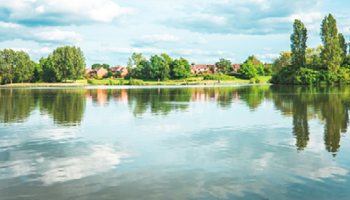
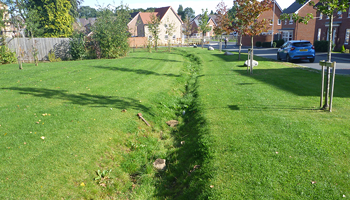
SuDS are increasingly used across housing and mixed-use developments to manage surface water, reduce flooding and improve biodiversity. Features can include swales, detention basins, ponds, wetlands, rain gardens and permeable paving.
Reggie explained that while SuDS deliver significant environmental benefits, they are also visible public-facing features that require careful consideration of how people will interact with them throughout their lifespan.
"The aim isn't to eliminate risk entirely," she said. "It's to understand it and manage it effectively."
RoSPA's SuDS safety reviews consider how people may use these spaces, identify potential risks and recommend practical measures that balance safety, drainage performance, amenity value and biodiversity.
The reviews can be undertaken during design stages, before sites are occupied and throughout the life of a development as conditions evolve.
Drought and flooding can create unexpected hazards
Reggie highlighted how climate change can alter the way SuDS features function over time. While more intense rainfall can increase pressure on drainage capacity, prolonged dry periods can also create unexpected challenges. Drought conditions can harden the ground and reduce infiltration, meaning rainfall that follows can accumulate more rapidly than expected.
Features that normally remain dry, such as vegetated swales, can quickly fill with water during extreme weather events, significantly changing their hazard profile.
The way people use these spaces may also change as temperatures rise. Water features may attract greater public use during periods of hot weather, creating additional safety considerations.
"Changing conditions make ongoing attention to performance and maintenance important," Reggie said.
Taking a proactive approach
Closing the webinar, Jules Robinson encouraged organisations to make use of the practical resources available through both RoSPA and the NHBC Foundation, including climate-risk checklists and guidance documents designed to help businesses anticipate emerging risks before they arise.
The webinar reinforced that climate resilience is no longer an optional consideration for the construction sector. Instead, it is becoming a core part of protecting workers, maintaining quality and ensuring that infrastructure remains safe and effective in the decades ahead.

SUDS report
Our consultants deliver SuDS reviews that reduce risk, save costs, and support planning approval.
Water safety at managed sites: What are your legal obligations?
Reggie Robinson, RoSPA Water & Leisure Consultant, and Carlene McAvoy, RoSPA’s Head of Policy look at the legislation affecting open water features within managed sites and how RoSPA can help.
Sustainable drainage systems (SuDS): Frequently-asked questions on safety, compliance and design
Get expert answers to common sustainable drainage systems (SuDS) questions, including safety reviews, planning requirements, drowning risks, attenuation basins, swales, vegetation and local authority adoption.