

Inland water warning after 202 accidental drowning deaths in 2025
New data published by the National Water Safety Forum (NWSF), led by RoSPA, reveals that the majority (57 per cent) of accidental drowning deaths in 2025 occurred at inland locations such as rivers, lakes, reservoirs, canals, quarry lakes and lochs.
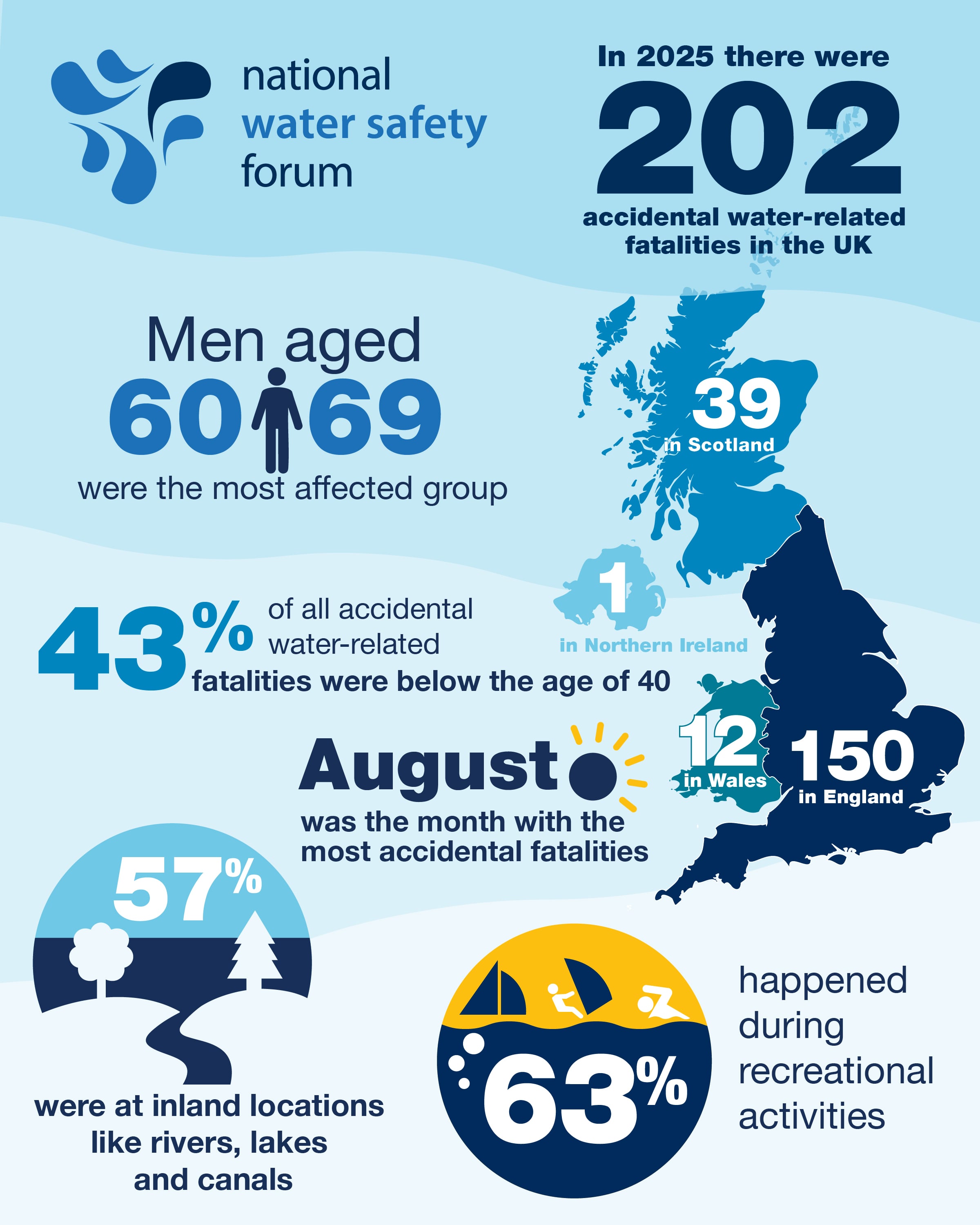
The 2025 Water Incident Database (WAID), which is maintained by the NWSF, reveals that there were 587 water-related fatalities in the UK from all recorded causes, including 202 accidental drowning deaths and a further 201 cases where the cause is still unknown, meaning the number of accidental fatalities is likely to increase as additional information becomes available from coroners.
August was the month with the highest number of accidental water-related fatalities in the UK, followed by June and July, with hot weather often correlating with a rise in accidental drownings.
Males accounted for 85 per cent of accidental fatalities, with those between 60 and 69-years-old most affected. However, 43 per cent of all accidental water-related fatalities were below the age of 40.
Recreational activities such as adventure sports, angling, boating and sailing accounted for 63 per cent of accidental drowning deaths, while everyday activities like walking and running accounted for 32 per cent of fatalities, meaning many of those who lost their lives were not intending to enter the water.
Cold water shock
Many inland waters stay dangerously cold all year round in the UK, remaining at 16°C or below even in summer, the temperature at which water is considered hazardous for cold water shock. Cold water shock is the body’s involuntary response to sudden immersion in cold water. It causes gasping, panic and loss of swimming ability, all of which can tragically lead to drowning. It also causes a spike in heart rate and blood pressure, which can result in a heart attack, even if the person is fit and healthy.
With more periods of hot weather and heatwaves forecast for the coming summer months, the NWSF is reminding everyone to enjoy the water safely at both inland waters and the coast by being aware of the risks, and by knowing how to help themselves and others in an emergency.
Professor Mike Tipton, Chair of the NWSF and leading expert in water safety and cold shock, said: “We are urging people to respect the water and to take actions to keep themselves safe – stick to supervised locations with lifeguards present, think before entering the water and enter the water slowly to reduce the risk of cold shock. If you do find yourself in trouble in the water, float on your back until you feel calm and either wait for rescue or swim to safety if you can.”
Phone Float Throw is a new public-facing water safety campaign from the NWSF and Respect The Water. It provides bystanders witnessing someone struggling in the water with practical instructions for how to help, without putting themselves in danger:
- Phone 999 to get help
- Tell the person to stay calm and float on their back
- Throw rescue equipment to help them float until emergency services arrive.
When we see someone in trouble in the water, or instinct can often be to jump in and attempt to rescue them, but entering the water yourself is dangerous and can put you at risk of drowning too. By remembering Phone Float Throw, bystanders can keep themselves out of danger and still provide lifesaving help to the person in the water.
Read the full WAID report at: https://nationalwatersafety.org.uk