
Ride Safe
How to avoid common motorcycle crashes
Riding a motorcycle safely requires both skill and good judgement. Developing and maintaining these skills is one of the things that makes riding so rewarding.
Collision studies show that the most common motorcycle crashes involve:
- Failure to negotiate bends, particularly on rural roads
- Other vehicles pulling out into the rider's path
- Collisions at junctions
- Collisions while overtaking
- Loss of control due to road conditions or excessive speed
Understanding these risks and adapting your riding accordingly can help you stay safe and enjoy your riding.
Riding safely on bends
Bends can vary significantly. Some bends are gentle and open up as you enter them, while others tighten dramatically.
To ride bends safely:
- Read the road ahead using clues such as road markings, hedgerows, trees and telegraph poles.
- Adjust your speed before entering the bend.
- If you're unsure how the bend develops, reduce your speed further.
- Avoid braking heavily while cornering whenever possible.
Entering a bend too fast can leave you with limited options and increase the risk of losing control.
You can learn more about motorcycle cornering by watching our video here:
Staying alert at junctions
Many motorcycle collisions happen at junctions, often because drivers fail to see an approaching rider or misjudge their speed.
As you approach a junction:
- Watch for signs that a vehicle may pull out, such as turning wheels or driver eye movements.
- Consider where you would go and how you would stop if a vehicle suddenly entered your path.
Even when you are clearly visible, other road users may not accurately judge your approach.
Overtaking safely
Overtaking requires good observation, sound judgement and an understanding of your motorcycle's acceleration and braking performance.
Before overtaking:
- Make sure you have a clear view of the road ahead.
- Be aware of hidden hazards over crests, around bends or at side roads.
- Consider how other road users may react. You can’t assume they will slow down to let you in.
- Don’t overtake near bends, junctions, pedestrian crossings, hills, dips and where road markings prohibit overtaking.
If you are riding an unfamiliar motorcycle, take time to understand how it performs before attempting overtakes.
Take care when filtering
Filtering through stationary or slow-moving traffic can be useful, but do it with care.
Remember that:
- Drivers may not see you in their mirrors.
- Vehicles can change lanes unexpectedly.
- Car doors may open without warning.
- Pedestrians may emerge from between vehicles.
Always filter at a speed that allows you sufficient time to react. If riding in a group, make your own decisions rather than simply following others.
Avoid loss of control
Leave space
Many rear-end collisions happen because riders follow too closely.
To reduce risk:
- Maintain a safe following distance.
- Ensure you can stop safely within the distance you can see to be clear.
- If a vehicle behind is following too closely, increase the space in front of you where possible.
Watch the road surface
Common hazards include:
- Wet or poor weather conditions
- Diesel spills
- Mud on the road
- Manhole covers
- Painted road markings
Be particularly alert near farms, building sites and areas where heavy vehicles turn. Keep your tyres in good condition and at the correctly pressure, and always adjust your riding to suit the conditions.
Motorcycling: A skill for life
Motorcycling is a skill that needs regular practice and continual development. If you have not ridden for some time, ease yourself back into riding and consider refresher training.
Reflect on your rides, learn from mistakes and near misses, and be aware of factors such as fatigue, distraction, stress, pressure from others and lack of recent practice.
Advanced rider training and assessment schemes, such as BikeSafe or advanced riding groups, can help identify areas for improvement and increase your confidence and safety on the road.
Further training and advice
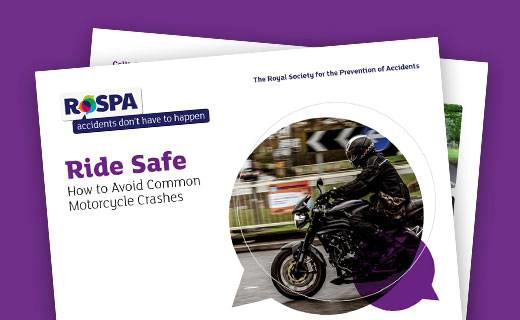
Ride Safe
How to avoid common motorcycle crashes
Motrocycling Cornering
Fatalities every year happen on rural roads often on a corner where the road changes direction